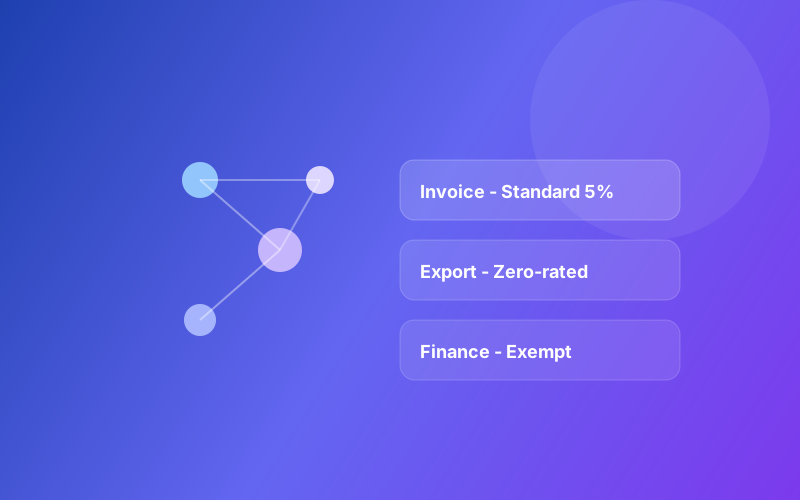
How AI Classifies Invoices for UAE VAT
- Author: TaxMind Team
- Published: 1 September 2026
Every VAT return is only as good as the classification behind it. If invoices are miscoded, your VAT201 boxes will be wrong — no matter how carefully you fill the form.
That is why AI invoice classification has become a cornerstone of modern UAE tax compliance.
The Classification Problem
UAE VAT treatments include:
- Standard-rated (5%) — most domestic taxable supplies
- Zero-rated (0%) — exports and certain qualifying supplies
- Exempt — specific categories such as some financial services and residential property
- Out of scope — items outside the VAT law
Human reviewers can classify well, but high invoice volumes make manual review slow and inconsistent. Different accountants may treat the same expense differently across periods.
How AI Classification Works
AI models trained on tax patterns and invoice structures can:
- Read line descriptions, supplier names, and amounts
- Infer the likely supply type and place of supply
- Suggest a VAT code with a confidence score
- Route low-confidence items to a human reviewer
- Learn from corrections over time
The result is faster period close with a full audit trail of decisions.
What Good AI Looks Like for UAE Tax
Not every generic OCR tool is enough. UAE-ready classification should understand:
- TRN formats and invoice mandatory fields
- Export evidence expectations for zero-rating
- Blocked input tax categories
- Mixed supplies and partial exemption signals
- Arabic and English invoice text
TaxMind.io is built specifically for this GCC context — not adapted from a generic global template.
Benefits for Finance Teams
- Hours saved every tax period
- Fewer FTA queries from misclassified lines
- Consistent treatment across branches and users
- Clear exception queues instead of spreadsheet chaos
- Better input VAT recovery through fewer missed claims
Human + AI Is the Right Model
AI should assist — not replace — professional judgement. The best workflows let AI propose classifications while accountants approve edge cases: complex contracts, multi-element supplies, and unusual export scenarios.
Getting Started
- Centralise sales and purchase invoices in one system
- Enable AI classification with confidence thresholds
- Review the exception queue weekly
- Lock classifications before VAT return generation
- Monitor your compliance score over time
Conclusion
Invoice classification is the foundation of accurate UAE VAT. With AI handling the volume and your team handling the exceptions, compliance becomes proactive instead of reactive.
See how TaxMind classifies invoices in practice — start your free trial.